Beautifully Marked: The Price You Pay for Dressing Like You Actually Mean It

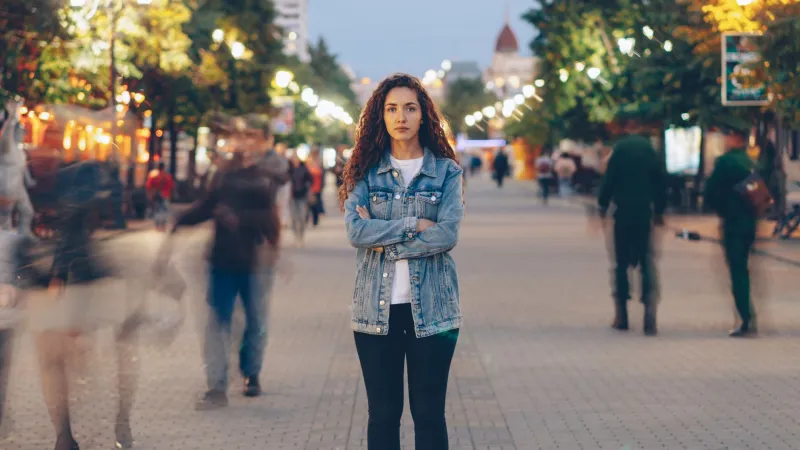
There's a moment every alt-dressing person knows intimately. You walk into a room — a work happy hour, a cousin's baby shower, a neighborhood block party — and you feel the air shift. Not dramatically. Nobody gasps. But you catch the sideways glances, the micro-pause before someone decides whether to approach you, the way a circle of people subtly closes before you reach it. You're dressed exactly the way you want to be dressed. And somehow, that's the problem.
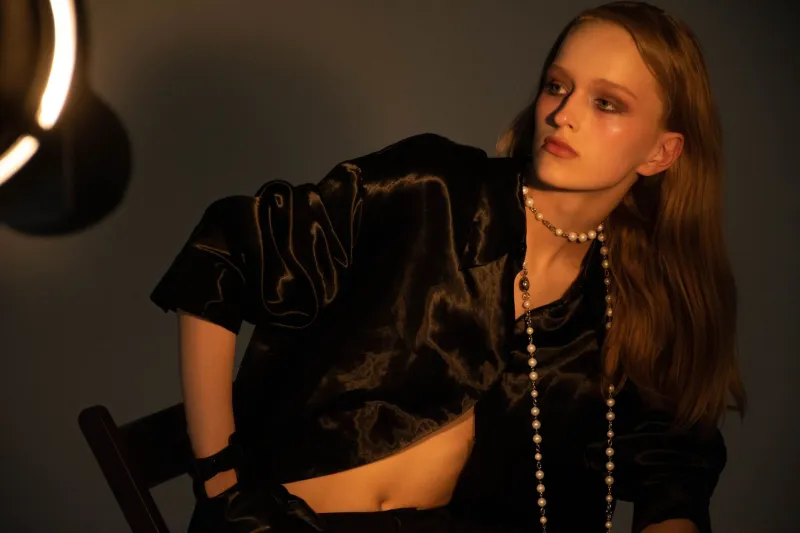
This is the paradox that doesn't get talked about enough in alt fashion spaces: the very thing that makes you magnetic to your people makes you a puzzle — or a provocation — to everyone else. The corset and the combat boots, the velvet blazer with the DIY patches, the layered silver rings that creep past the knuckle — they're a signal flare. They call in your crowd. They also light you up as a target for everyone who doesn't know how to read the frequency.
The Double-Edged Power of a Visible Identity
Alt fashion has always functioned as a communication system. Before you open your mouth, your clothes have already delivered a manifesto. And for a lot of people — especially those who spent years trying to disappear into khakis and crew necks — that legibility is everything. It's the reason a stranger at a concert locks eyes with you and immediately becomes a friend. It's why you can walk into a thrift store in a city you've never visited and find your people within minutes.
That visibility is real, and it's genuinely powerful. But visibility is never neutral. It doesn't just attract — it also exposes.
Ashley, a 29-year-old graphic designer from Chicago, describes it plainly: "I've had more meaningful connections with strangers because of how I dress than most people have in years. But I've also had to sit through my dad's work dinners where I could feel every person at the table doing the math on me before I'd said a single word. You're never just a person. You're a statement they haven't decided how to feel about yet."
That experience — of being pre-read, pre-judged, pre-filed — is one of the defining emotional textures of alt fashion life. And it doesn't go away with confidence. Confidence changes how you carry it. It doesn't make it disappear.
The Spaces That Make It Hardest
Some environments are built to flatten difference. Corporate networking events. Family reunions. Formal occasions where the dress code is unspoken but absolute. These are the spaces where alt aesthetics create the most friction — not because the clothes are objectively wrong, but because they refuse to perform the kind of invisible conformity those environments run on.
Marcus, a 34-year-old project manager in Atlanta, talks about the specific exhaustion of navigating professional spaces: "I toned things down for years because I thought it was just easier. But 'easier' turned out to mean 'more invisible in ways that actually cost me.' When I started dressing the way I wanted again, yeah, there were more awkward moments. But I also stopped dreading Monday mornings. The math changed."
The calculation is different for everyone, and it shifts depending on race, gender, body size, and geography. A white woman in a Victorian-inspired black gown gets read differently than a Black man in the same aesthetic register. A plus-size person in full alt regalia navigates a layer of body-commentary that a straight-size person doesn't encounter. Alt fashion is not a monolith, and neither is the friction it generates.
Belonging That Has a Body Count
Here's the thing nobody puts on a mood board: belonging to an alt community is one of the most profound antidotes to loneliness that exists. The specificity of it — the shared references, the niche aesthetics, the mutual recognition — creates bonds that feel almost ancestral. You didn't just find people who like similar things. You found people who understand why those things matter, and what it cost to choose them.
But that depth of belonging can make the outsider moments sting harder, not softer. When you know what genuine recognition feels like, its absence becomes more noticeable. The family member who's been making the same joke about your "costume" for a decade doesn't just land as annoying. It lands as a reminder that some people who are supposed to know you have chosen, repeatedly, not to.
Jordan, a 26-year-old based in Portland, describes a specific kind of grief: "The loneliest I've ever felt wasn't around strangers. It was at my own kitchen table. My family loves me. But they've never once asked about any of it — not what it means, not why I love it, nothing. They just wait for me to grow out of it. That silence is its own kind of weight."
Navigating the Friction Without Losing the Thread
So how do you hold both things? How do you stay rooted in an identity that costs you socially without letting the cost hollow you out?
Most people in alt communities develop a kind of strategic code-switching — not a betrayal of identity, but a fluency in multiple registers. You're not performing conformity when you dial back the hardware for a job interview; you're playing a longer game. The goal isn't to hide. The goal is to survive the spaces that can't see you yet, so you have the energy to show up fully in the ones that can.
But there's also something to be said for refusing to negotiate. For the people who walk into every room — family dinner included — in full expression of who they are, the friction doesn't disappear. It just stops being a surprise. And there's a strange freedom in that. When you stop trying to manage other people's discomfort with you, you get a lot of your own energy back.
The Rose Beneath the Armor
Alt fashion has always understood that beauty and protection aren't opposites. The thorn doesn't undermine the rose — it's part of what makes the whole thing worth approaching carefully, worth taking seriously. Dressing with full authenticity is like that. It's an offering and a boundary at the same time. Come close if you can handle the full picture. Keep your distance if you need something softer.
The loneliness is real. The belonging is realer. And the act of choosing, every single morning, to dress like you mean it — that's not a fashion statement. That's a practice. One that costs something and gives something back, usually in that order.
Most of us wouldn't trade it. Not even on the hard days. Especially not on the hard days.