The Secret Garden of Scent: How Alt Communities Are Building Fragrance Worlds the Mainstream Can't Touch
There's a perfume counter at every department store in America, and it smells exactly the same. That's not an accident — it's a business model. The major fragrance houses have spent decades engineering universal appeal, smoothing out every rough edge, every strange note, every olfactory dare until what's left is something inoffensive enough to sell to everyone and memorable enough for no one.
Alt fashion noticed. And then alt fashion walked out the door.
What's been quietly building in its wake is something far more interesting: a fragrance underground that runs on community, craft, and a deep refusal to smell like the mall. Independent perfumers, DIY scent collectives, and obsessive niche fragrance hunters are constructing an entirely parallel world — one where a bottle of perfume can carry the weight of an identity, a subculture, and a kind of quiet sedition.
Why Scent Became the New Frontier of Alt Identity
Alt fashion has always understood that dressing is a language. Every stud, every ruffle, every deliberate clash of velvet and hardware is a sentence in an ongoing conversation about who you are and who you refuse to be. Scent, it turns out, is the paragraph that comes before you even open your mouth.
Fragrance is invisible armor. It enters a room before you do. It lingers after you leave. For communities that have spent years building complex visual identities, the idea that your scent could do the same kind of work — signal your tribe, push back against convention, tell a story — is genuinely thrilling.
This isn't entirely new territory. Goth and punk communities have long gravitated toward dark, resinous, unconventional scents. Black Phoenix Alchemy Lab, the California-based indie perfumery that's been operating since the early 2000s, built a devoted alt following almost entirely through word-of-mouth and online communities long before "indie fragrance" was a recognized market category. Their scents have names like The Caterpillar and Dorian, and they read like literature. That was always the point.
But what's happening now feels like an acceleration. The tools exist — social media, small-batch manufacturing, direct-to-consumer platforms — and the appetite is enormous.
The Apothecary Aesthetic and the Art of the Small Batch
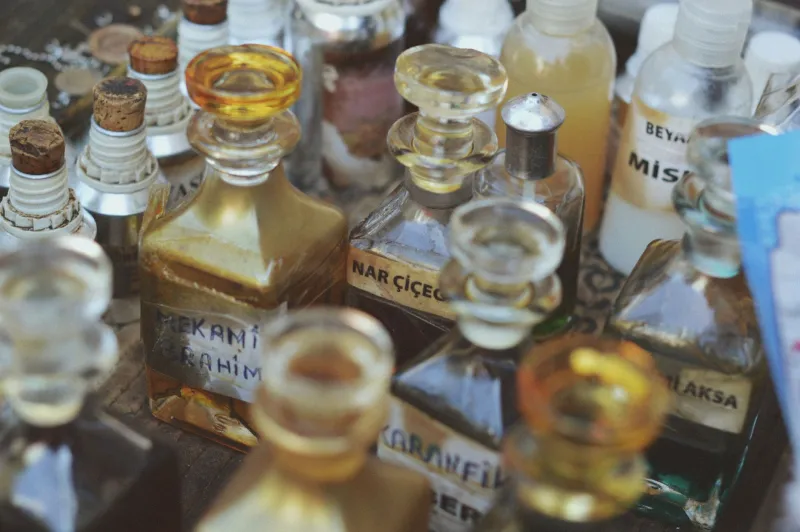
Walk into any indie fragrance space with an alt sensibility and you'll notice the visual language is completely intentional. Dark glass bottles. Wax seals. Hand-lettered labels that look like they belong in a Victorian cabinet of curiosities. This isn't just branding — it's world-building.
Small-batch indie perfumers operating within alt-adjacent spaces are treating fragrance creation the way a tattoo artist treats their flash work: as deeply personal, technically skilled, and not for everyone. That specificity is the entire appeal.
Brands like Fzotic, Imaginary Authors, and Zoologist have attracted cult followings by committing to genuinely weird, genuinely specific olfactory concepts — a perfume inspired by a specific forest floor after rain, or the inside of an old library, or the memory of a carnival at dusk. These aren't scents designed to be universally liked. They're designed to be recognized by the right person.
For alt consumers who have spent their whole lives being the person who gets it when others don't, that kind of designed specificity is deeply satisfying.
TikTok's Scent Swap Ecosystem Is Quietly Revolutionary
Here's where it gets genuinely interesting from a community-building perspective: fragrance TikTok — affectionately known as #FragTok — has developed its own underground economy of scent swaps, decant culture, and collective discovery that is actively dismantling the gatekeeping that made niche perfumery inaccessible for so long.
Decanting — the practice of dividing a full bottle of perfume into smaller sample sizes to share or sell — has turned fragrance from a luxury purchase into a communal experience. Sites like Scent Split and Fragrantica's community boards have existed for years, but TikTok brought the culture to a new generation of alt-fashion-adjacent scent hunters who weren't necessarily plugged into those older communities.
What you see now is a generation of younger alt consumers who treat fragrance the way their predecessors treated vinyl records or underground zines: as objects worth hunting for, worth trading, worth building relationships around. There's a whole social infrastructure here — people who are known in their communities specifically for their noses, for their ability to recommend the right scent for a specific vibe, for the care they put into packaging a decant to send to a stranger across the country.
That's not consumerism. That's culture.
DIY and the Radical Act of Making Your Own
For some corners of the alt fragrance world, even the most independent indie brand isn't independent enough. DIY scent-making has become its own subculture within the subculture, with communities on Reddit, Discord, and Instagram sharing formulas, sourcing raw materials, and workshopping compositions with the same nerdy intensity that characterizes any alt craft community.
The barrier to entry has dropped dramatically. You can buy quality fragrance materials — aromatic chemicals, natural absolutes, fixatives — from suppliers like Perfumer's Apprentice or Aztec International for relatively modest amounts. YouTube and community forums have made the technical knowledge accessible. What you're left with is a community of people who are making genuinely sophisticated, genuinely personal fragrances in their apartments and selling small batches at local markets or through Instagram.
This is the most Iron Rose version of fragrance culture imaginable: thorns and lace in a bottle, crafted by hand, for people who understand what that means.
Wearing It Like a Manifesto
What ties all of this together — the indie brands, the decant swaps, the DIY apothecaries — is the same impulse that drives alt fashion at its best. The refusal to accept that your options are limited to what the mainstream decides to offer you. The insistence that your identity is worth the work of building something specific, something real, something that couldn't belong to just anyone.
A fragrance chosen from a department store counter is a costume. A fragrance hunted down through a community forum, sampled from a hand-labeled decant, or mixed by your own hand in your own kitchen is something else entirely. It's a statement. It's a story. It's a small, invisible act of resistance that you carry on your skin all day.
The mainstream fragrance industry will keep making its safe, smooth, universally palatable products. And the alt fragrance underground will keep building its secret garden — stranger, more specific, and infinitely more alive.
You know which one smells better.