Dressed Easy, Living Loud: Why Choosing Comfort Is Alt Fashion's Realest Power Move
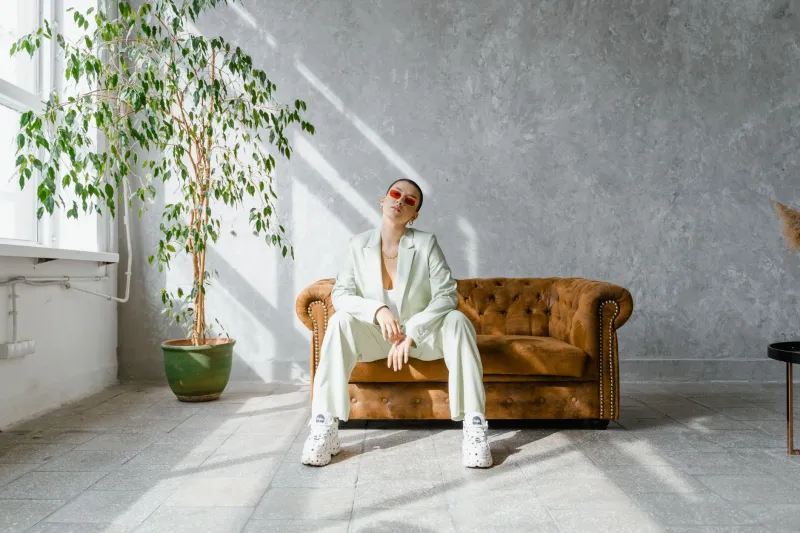
There's a story a lot of us in the alt community have told ourselves for years. It goes something like this: real style hurts. The tighter the corset, the more commitment you're showing. The higher the platform, the closer you are to the aesthetic gods. Pain is the toll you pay at the gate of authenticity, and if you're not suffering at least a little, are you even trying?
Here's the thing, though. That story was never really about fashion. It was about punishment — and it's time we stopped pretending otherwise.
The Mythology of Suffering for Style
The idea that discomfort equals dedication didn't originate in goth clubs or punk basements. It's baked into the broader history of Western fashion, which has spent centuries literally reshaping bodies — particularly women's bodies — to fit an ideal that prioritized appearance over function, performance over personhood. Corsets, crinolines, stilettos: the through-line isn't aesthetics, it's control.
Alt fashion, for all its rebellion, absorbed that logic more than it challenged it. The community swapped one set of painful beauty standards for another and called it countercultural. And look — there's nothing inherently wrong with a dramatic platform boot or a structured corset worn by choice, for the joy of it. That's not the problem. The problem is when discomfort stops being a choice and starts being a prerequisite for belonging.
When someone new to the scene asks whether their soft-soled boots are "alt enough," that's when the mythology has curdled into gatekeeping.
What Designers Are Actually Building Now
Something has been quietly shifting in alt fashion's design landscape over the last few years, and it's not a compromise — it's an evolution. Designers working in the dark-romantic, alternative, and avant-goth spaces are increasingly building collections around bodies that actually need to move.
Think stretch-velvet trousers with enough give to let you crouch, climb, or dance. Structured blazers with interior boning that creates shape without restricting breath. Boots with cushioned insoles hidden beneath their aggressively chunky soles. Lace that's been bonded to a soft jersey backing so it drapes instead of scratching. The edge is still there — the silhouette, the palette, the intention — but the wearer isn't paying for it in physical discomfort by the end of the day.
This isn't fast fashion cutting corners. It's thoughtful construction that takes the wearer seriously as a person with a full life to live, not just a mannequin for an aesthetic.
The Psychology Behind "Earning" Your Look
So why has the suffering narrative stuck around so long, even in communities that pride themselves on rejecting mainstream values? Part of it is psychological — discomfort signals effort, and effort signals sincerity. If getting dressed cost you something, the logic goes, then it must mean something.
But that framework is deeply flawed, and honestly, it's doing the most damage to the people the alt community should be most committed to protecting: folks with chronic illness, mobility differences, larger bodies, sensory sensitivities, and anyone whose relationship with physical discomfort isn't a choice but a daily reality.
When we make pain the price of admission, we're not being authentic. We're being exclusive. We're saying, implicitly, that this space is for people whose bodies can afford the toll. That's not rebellion. That's just repackaged elitism in a better color palette.
Comfort as a Radical Reclamation
Here's the reframe: choosing comfort — deliberately, unapologetically, without shrinking yourself to justify it — is one of the most genuinely countercultural things an alt-fashion lover can do right now.
We live in a culture that still, in 2024, tells certain bodies they should be grateful for any representation at all. That tells disabled people adaptive clothing should be invisible and clinical. That tells plus-size people they should cover up rather than command space. That tells people with sensory processing differences their needs are inconvenient.
Showing up in a look that is unmistakably you — dark, dramatic, intentional — while also being physically at ease in your body? That's a middle finger to every system that ever told you your comfort was less important than your appearance.
True power dressing isn't about enduring. It's about arriving fully, without apology, in a body that feels supported rather than disciplined.
Building a Wardrobe That Works With You
If you're ready to stop treating your wardrobe like a test you have to pass, here's where to start:
Audit your pain points. Literally. Go through your closet and pull every piece that you love the look of but dread wearing. Identify what's actually causing the problem — is it the fabric, the fit, the construction? Sometimes a small alteration (adding a panel, swapping a zipper, relining a jacket) can save a piece you love. Sometimes it can't, and that's okay too.
Prioritize fabric before silhouette. A dramatic silhouette in a fabric that fights your body is always going to feel like a battle. The same silhouette in something that moves with you? Completely different experience. Seek out stretch velvet, ponte knit, soft faux leather, and woven fabrics with at least a little give.
Don't apologize for your footwear choices. The boot discourse in alt communities is exhausting. Wear the platform if you love it and can physically manage it. Wear the flat if that's what keeps you in the game. A crepe-soled Chelsea boot in black is still deeply, completely alt. Your feet carrying you through the world is more important than anyone's opinion about your heel height.
Seek out brands that design with intention. More independent alt and dark-aesthetic designers are building comfort into their process from the start. Support them. Ask questions about construction when you're shopping. The more we signal that we care about wearability, the more the market responds.
Let go of the performance. This is the hardest one. The alt community can have a complicated relationship with authenticity policing, and unlearning the instinct to prove yourself through suffering takes time. But every time you choose a piece because it makes you feel genuinely powerful — not just visually striking, but good — you're practicing something important.
The Rose Without the Thorn Tax
Iron Rose exists in the space where thorns meet lace — where beauty and edge aren't opposites but partners. And that's exactly where this conversation lives. The thorns don't have to draw blood to be real. The lace doesn't have to scratch to be romantic. The most striking looks, the ones that actually stop people in their tracks, are worn by people who are fully inhabiting them — not white-knuckling through the day hoping they can make it to the car.
Comfort isn't the enemy of alt fashion. Comfort is what lets you stay in the room long enough to actually change it.
Wear what feels good. Look incredible doing it. That's the rebellion.