Frills With Fangs: Why Alt Communities Are Making Hyper-Femininity Their Most Powerful Weapon
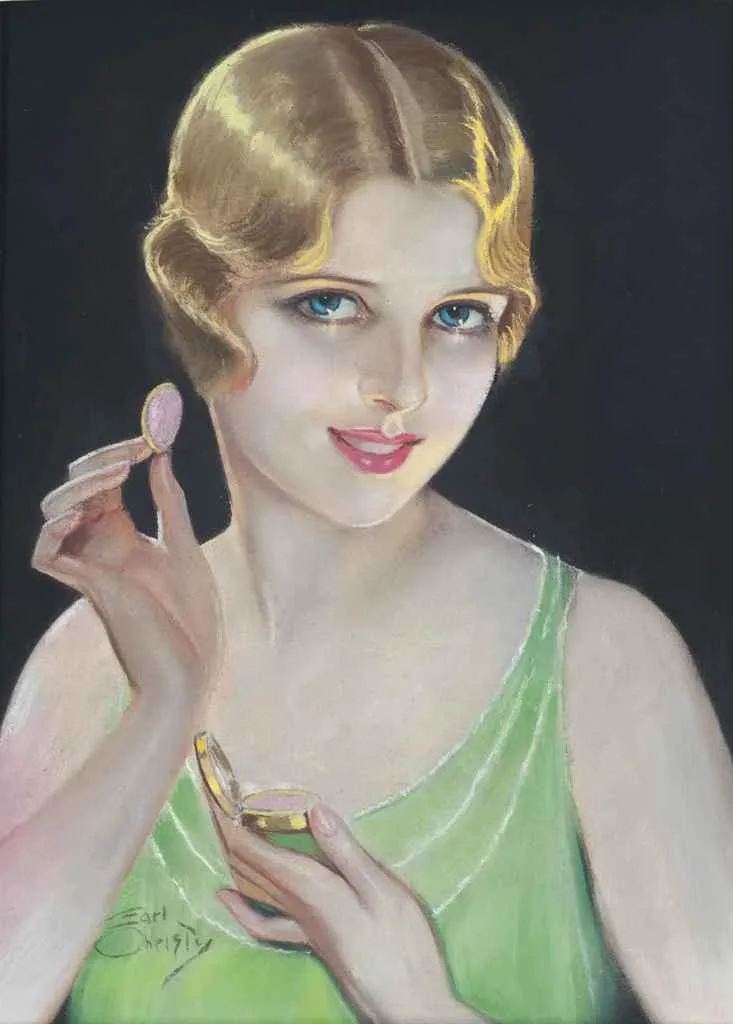
Photo: F. Earl Christy, Public domain, via Wikimedia Commons
There's something quietly radical happening in the dressing rooms of America's alternative communities. It's not a spike through a lapel or a fresh shave into an undercut. It's a bow. A big, satin, unapologetically precious bow — pinned to a corset, clipped to a platform boot, or knotted into hair that's simultaneously cotton-candy pink and shaved on one side. If you're paying attention, you already know: the most subversive thing an alt person can wear right now might just be something your grandmother called pretty.
This isn't irony. It's not a costume. It's a movement — and it has teeth.
The Paradox at the Center of It All
For decades, alternative fashion drew its power from a rejection of softness. The goth scene, punk, industrial — these aesthetics were built on hard lines, dark palettes, and a visual vocabulary that leaned deliberately away from anything coded as delicate or traditionally feminine. There were reasons for that. Softness had been weaponized against women and femmes for generations, used to diminish, infantilize, and contain. Rejecting it felt like freedom.
But something shifted. Younger alt communities — particularly queer, nonbinary, and gender-nonconforming folks — started asking a different question: what if the problem was never the bow? What if it was who got to decide what the bow meant?
The result is what some are calling hyper-feminine resistance — a deliberate, fully conscious embrace of florals, corsetry, pastels, and lace not as a concession to mainstream femininity but as a reclamation of it. When a nonbinary person in a babydoll dress and Doc Martens walks into a space, they're not playing by anyone else's rules. They're rewriting them.
Goth's Complicated Relationship With Gender
Let's be honest about something: traditional goth spaces haven't always been the gender utopias they sometimes get credited as. Yes, goth culture loosened the tie between masculinity and certain aesthetic choices — men in eyeliner, in skirts, in velvet. That mattered. But the scene also developed its own rigid hierarchies, its own definitions of what counted as authentically dark versus what was considered too soft, too cute, too pop.
Pink? Suspect. Florals? Risky. Anything that read as overtly girly? You'd better be doing it with enough ironic distance to keep your credentials intact.
What's happening now is a direct pushback against those unspoken rules. Cottagecore goth, pastel goth, the ongoing explosion of dark romanticism — these aren't dilutions of alternative culture. They're expansions of it, driven largely by communities who were told their version of darkness wasn't dark enough because it came wrapped in chiffon.
The Corset as Contested Territory
Few garments carry as much political weight as the corset. It's been a symbol of oppression, a tool of bodily control, a Victorian nightmare — and also, increasingly, a symbol of reclamation. The modern corset revival happening across alt fashion spaces isn't nostalgic. It's confrontational.
Worn over a band tee, laced over a billowing floral blouse, or paired with a mini skirt and combat boots, the corset becomes something different from what it was. It's no longer a garment imposed on a body. It's a choice made by a body — often a body that mainstream fashion has historically ignored or policed. Plus-size alt folks, trans women, nonbinary wearers — all are showing up in corsetry and redefining what the silhouette communicates.
The message isn't I want to look like a Victorian lady. The message is I decide what this garment means on my body, and you don't get a vote.
Florals in February (And Every Other Month)
Floral prints have always had a complicated relationship with alt fashion. Worn in the right context — faded, gothic, printed on black — they were acceptable. But bright florals? Romantic florals? The kind that look like your aunt's garden in full bloom? Those were harder to pull off without catching side-eye.
Not anymore. Across alt communities on TikTok, in indie boutiques from Portland to Brooklyn, and at every Renn Faire that's quietly become a queer fashion runway, florals are having a full moment. And the people wearing them aren't doing it to seem approachable or soft. They're doing it because beauty is not the enemy — the gatekeeping of beauty is.
There's a particular power in showing up to spaces that have historically excluded you, dressed in something that radiates joy and femininity, and refusing to apologize for either. It destabilizes the assumption that darkness requires austerity, that edge requires severity.
Pastels and the Politics of Pretty
Pink, lavender, mint, butter yellow — these colors have been used to sort people into boxes since before we were born. Pink for girls. Soft colors for soft people. The implication being that softness is weakness, and weakness is disqualifying.
Alt communities wearing pastels — especially queer and trans communities — are doing something more complex than just expanding a color palette. They're dismantling the whole system of meaning that those colors were supposed to enforce. A trans woman in a lavender corset and black boots isn't conforming to femininity as it's been defined for her. She's building her own definition, on her own terms, with her own aesthetic logic.
That's not gentle. That's revolutionary.
How to Wear the Rebellion
If this whole conversation is making you want to go add some lace to your wardrobe, good. Here's how to lean into hyper-feminine alt dressing without losing your edge:
- Mix textures aggressively. Velvet with leather. Silk with denim. The contrast is the point.
- Let your hardware do the heavy lifting. Chunky boots, studded belts, and silver rings balance out even the frilliest top.
- Don't soften the silhouette — amplify it. A full skirt with a structured corset hits differently than either piece alone.
- Color without apology. Pastel doesn't have to be muted. Go bright. Go saturated. Let the pink be pink.
- Accessorize with intention. A floral hair clip next to a septum ring isn't an accident. It's a statement.
The Thorn Inside the Rose
Here at Iron Rose, we've always understood that the most interesting fashion lives in the tension between opposites — between the thorn and the petal, the hard and the soft, the dark and the luminous. What alt communities are doing with hyper-femininity right now is exactly that: finding the thorn inside the rose and deciding it's the whole point.
Femininity isn't fragile. It never was. It's been made to seem that way by people who benefited from that framing. Reclaiming it — loudly, visually, unapologetically — is one of the more genuinely radical things you can do with a wardrobe.
So tie the bow. Wear the florals. Lace up the corset. And let anyone who questions it figure out on their own why they're so threatened by something so pretty.