Dressed to Defend: The Hidden Vulnerability Inside Alt Fashion's Boldest Armor
There's a moment a lot of people in the alt community know intimately. You're standing in front of the mirror, layering on the harness, the platform boots, the jacket with the hardware that catches light like a warning. You look formidable. Maybe a little dangerous. Definitely not someone to mess with. And underneath all of it, your hands are shaking slightly, because today is the kind of day where you really, really need the armor to hold.
That tension — between projecting invincibility and privately falling apart — isn't a contradiction in alt fashion. It's the whole point.
The Jacket as a Fortress
Leather has been doing emotional heavy lifting in American subcultures since at least the 1950s. Bikers wore it as a second skin against the road and against a society that didn't know what to do with them. Punks weaponized it. Goths softened it with lace and silver rings. Today, a well-broken-in leather jacket in the alt wardrobe occupies a specific psychological space that's hard to name but immediately recognizable — it's the thing you reach for when you're not sure you can face the day without a little extra fortification.
Brooklyn-based designer Mara Voss, whose label specializes in hand-distressed leather outerwear, puts it plainly: "Every person who comes into my studio tells me some version of the same story. They want something that makes them feel protected. But when I ask what they mean by that, they almost always end up talking about something internal. A breakup. A bad job. A family that doesn't get them. The jacket isn't keeping the cold out. It's keeping something else out."
What Voss is describing has a name in psychology — what researchers sometimes call "enclothed cognition," the documented phenomenon where the symbolic meaning of clothing actually shifts how we think and feel. When you put on something associated with toughness, your brain starts to perform toughness. The armor works. But here's the thing about armor: you only need it when you're wounded.
Chains, Corsets, and the Intimacy of Constraint
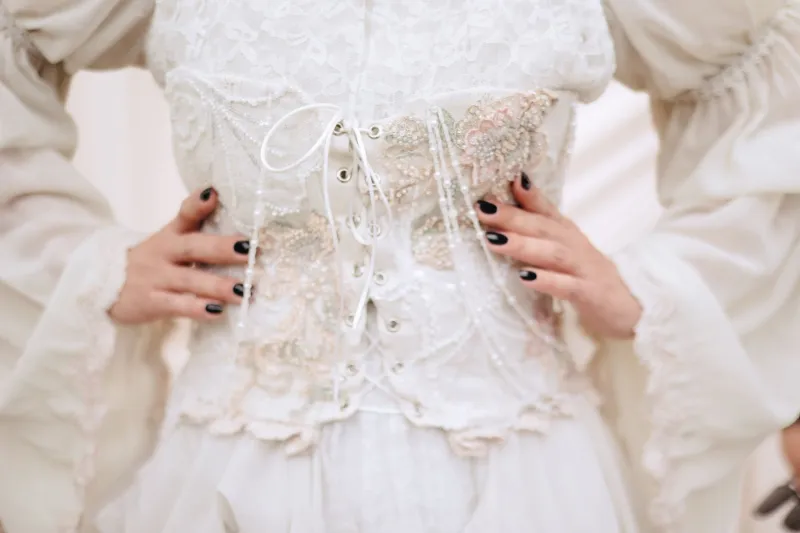
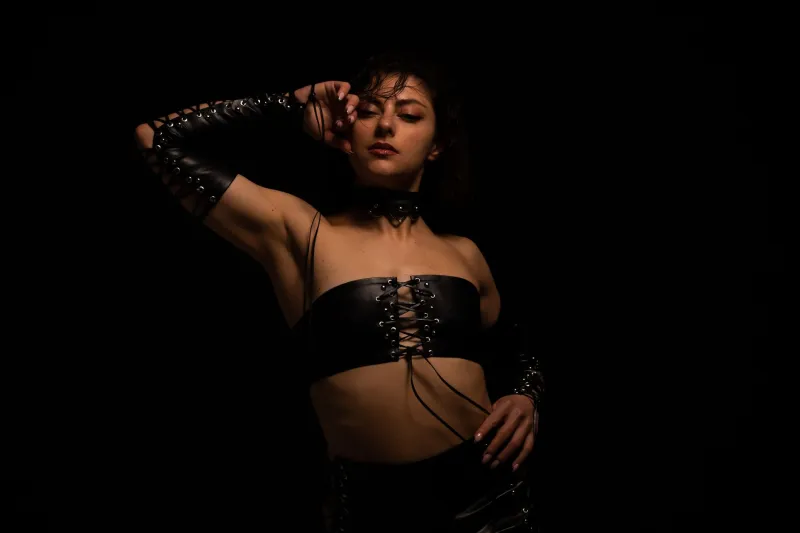
If leather is the blunt instrument of alt fashion's emotional toolkit, chains and corsetry are the more nuanced ones. Both carry a loaded history — chains referencing bondage aesthetics, punk rebellion, and raw industrial energy; corsets threading through centuries of constraint, reclamation, and eventually, radical self-expression. In the modern alt wardrobe, they often show up together, and the combination says something complicated.
A chain draped across a chest or looped at a hip is simultaneously aggressive and decorative. It invites closeness (look at this detail) and warns against it (this is not soft). A corset cinches and defines, but it also holds. For a lot of wearers, that physical sensation of being held — even by your own clothing — is the point.
"I started wearing corsets during a period when I felt really scattered," says Jess, a 27-year-old retail manager from Chicago who's been building her alt wardrobe for about six years. "Everyone thought I was doing this power-dressing thing, and I was, kind of. But honestly? I just wanted to feel contained. Like something was keeping me together from the outside when I couldn't do it from the inside."
This is the paradox at the heart of alt fashion's most dramatic pieces. The more imposing the silhouette, the more it tends to reveal about the interior life of the person wearing it — not because they're being careless, but because the act of choosing that level of armor is itself an admission that armor is necessary.
Dramatic Silhouettes and the Performance of Confidence
Wide shoulders. Floor-length skirts. Dramatic volume. Alt fashion has always loved a silhouette that takes up space, and there's a reason for that beyond pure aesthetics. Taking up space — visually, physically — is something a lot of people in alt communities were actively discouraged from doing before they found their style language.
For queer wearers, neurodivergent folks, people who grew up being told they were too much or not enough, dressing in ways that demand attention can feel like a revolutionary act. But it can also feel terrifying. The bigger the outfit, the higher the stakes. You're asking to be seen, loudly, which means you can be loudly rejected.
Los Angeles-based stylist and alt fashion consultant Dev Reyes works with clients who are building wardrobes that reflect identities they're still growing into. "I see it constantly," Reyes says. "Someone comes to me wanting to dress more boldly, and when we start pulling pieces, they freeze up. Not because they don't love the clothes — they do. But because wearing them means committing to being visible. And being visible is genuinely scary for a lot of people, especially if visibility has historically meant being targeted."
The dramatic silhouette, then, is both the bravest and most exposed thing in the wardrobe. It's a dare — to the world, and to yourself.
When the Shield Becomes the Self
Here's where it gets interesting. For a lot of long-term alt fashion devotees, something shifts over time. The pieces that started as protection start to become identity. The jacket stops being what you put on when you're scared and becomes just... what you wear. The armor integrates.
This isn't a loss of vulnerability — it's more like a renegotiation. The clothes stop being a wall and start being a language. And like any language, they become capable of expressing nuance: the day you're genuinely confident versus the day you're performing it, the look that says "I'm here and I'm fine" versus the one that whispers "I'm here and I'm barely holding on, but I'm still here."
Jess from Chicago describes it this way: "At some point, the corset stopped being about holding myself together and just became part of how I look. But I still know, when I reach for it on certain mornings, what I'm asking it to do. It's like it has two jobs now."
That duality — the piece that functions and the piece that protects, simultaneously — is what makes alt fashion's relationship with boldness so different from mainstream power dressing. A power blazer in a corporate context is designed to project authority outward. Alt fashion's armor is in constant conversation with the interior. It faces both ways.
Wearing the Wound
There's something almost poetic about the fact that alt fashion's most intimidating aesthetics are also its most confessional ones. The thorns, the chains, the silhouettes built to intimidate — they're all, at some level, evidence of softness. You don't build walls around things that don't need protecting.
And maybe that's the most honest thing alt fashion does: it refuses to pretend that strength and vulnerability are opposites. It wears them both at once, layered like hardware over silk, spikes over lace, darkness over something that bruises easily and knows it.
The armor paradox isn't a problem to solve. It's a truth to dress around, every single day.