Swipe Different: How Alt Aesthetics Are Rewriting the Rules of Attraction
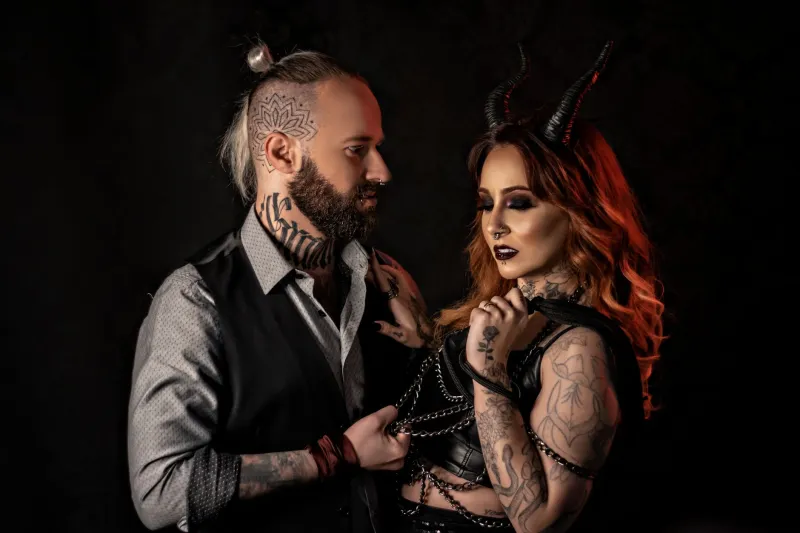
There's a moment a lot of alt girls know well. You upload a photo — maybe you're wearing your favorite corset over a thermal, silver rings stacked to the knuckle, liner sharp enough to cut — and you brace yourself. Because for a long time, dressing the way you actually wanted to meant accepting a narrower dating pool. It meant fielding unsolicited commentary. It meant being told, directly or indirectly, that the way you looked was a problem to be solved before anyone serious would take you seriously.
That moment is starting to feel different. And the shift is bigger than a vibe change — it's a full restructuring of what desire looks like in America right now.
The Algorithm Didn't See It Coming
Dating apps were built around a pretty conventional idea of attractiveness. Bright smiles. Clean backgrounds. The kind of photos that could double as a LinkedIn headshot if you squinted. For a long time, alt aesthetics were treated as a liability in that space — something to soften or hide until you'd already hooked someone with a more "approachable" first impression.
Then something cracked open.
Hinge, Bumble, and Tinder all started surfacing data suggesting that distinctiveness — not conventional polish — was driving higher match engagement among younger users. Profiles that leaned into a specific, unconventional look were getting more meaningful right-swipes from people who were actually compatible, rather than a flood of lukewarm interest from people who'd swiped on everyone. Turns out, when you look like yourself, you attract people who are actually looking for you.
For alt daters, this wasn't a surprise. It was a long time coming.
Dressed Like a Declaration
Here's what gets overlooked in conversations about alt fashion and dating: the clothes aren't just an aesthetic choice. They're a filtering system. When you walk into a first date in platform boots and a velvet blazer with a vintage band tee underneath, you're not just expressing yourself — you're immediately sorting the room. The people who light up at what they see are your people. The people who flinch have just saved you a second date.
This is what makes alt dressing in romantic contexts genuinely radical. It removes the performance of palatability. You don't get to the third date and suddenly reveal that you own more black clothing than color. You don't have to ease someone into who you are. The thorns are visible from the start — and that's the whole point.
Millennial alt women especially talk about this as a kind of liberation that took years to claim. After a decade of being told their aesthetic was "a lot" or "intimidating," many of them stopped apologizing for it entirely. And what followed, almost universally, was better dating. Not necessarily more of it — but better. More honest. More grounded in actual compatibility rather than projected potential.
The New Attraction Standard
Gen Z is pushing this even further. For a generation that grew up with TikTok subcultures and the mainstreaming of alt-adjacent aesthetics — cottagecore, dark academia, goblincore, soft goth — the line between "alternative" and "normal" is genuinely blurry. What their parents might have called edgy is just Tuesday.
This is reshaping attraction standards in real time. Studies on Gen Z dating behavior consistently show that authenticity ranks higher than conventional attractiveness metrics. A 2023 survey by YPulse found that Gen Z daters prioritize "someone who has their own distinct style" above almost every other surface-level quality. They're not looking for someone who fits a mold — they're looking for someone who clearly broke it.
Alt fashion, with its emphasis on self-construction and deliberate self-expression, is perfectly positioned for this moment. It's not just clothing. It's evidence. Proof that someone has done the internal work of figuring out who they are and committed to showing it.
Within the Community: Love With Its Guard Down
Inside alt communities themselves, dating dynamics carry their own specific texture. There's a shorthand that exists between people who share an aesthetic language — you both know what it means to haunt a thrift store for three hours, to have strong opinions about boot construction, to feel more at home in a dimly lit venue than a rooftop bar with a dress code.
But it goes deeper than shared taste. Alt communities have long operated as spaces where emotional honesty is valued in ways mainstream culture sometimes discourages. The same impulse that makes someone willing to dress against the grain tends to make them more comfortable sitting with complexity — in themselves, in their relationships, in the people they love.
That doesn't mean it's all perfectly navigated. Alt communities have their own hierarchies and gatekeeping, their own performance pressures. But the baseline expectation that you'll be honest about who you are — sartorially and otherwise — creates a different foundation for intimacy.
Vulnerability as a Love Language
There's something worth sitting with here: alt fashion has always been about wearing the interior on the exterior. The darkness, the softness, the contradiction — all of it visible, all of it intentional. That's an inherently vulnerable act. And vulnerability, as it turns out, is incredibly attractive.
The romantic appeal of someone who has the courage to be visibly, defiantly themselves is hard to overstate. It signals security. It signals self-awareness. It signals that this person is not going to spend the relationship hiding from you. When someone shows up in full — lace and leather, smudged liner and soft eyes — they're already doing the thing that most relationships struggle to achieve: showing you who they actually are.
The alt aesthetic, at its core, is an act of trust. You're betting that the right people will see you and recognize you. That's not just a fashion philosophy. It's a blueprint for how to love.
The Quiet Revolution Is Loud Now
Call it a quiet revolution, but it's getting harder to ignore. Alt aesthetics are reshaping not just what Americans wear, but who they want, how they date, and what they're willing to accept in a partner. The daters who once felt like they had to choose between being themselves and being loved are increasingly refusing the premise of that choice.
And the culture is catching up. Slowly, imperfectly, but genuinely.
So wear the boots on the first date. Keep the rings on. Let your look do what it was always meant to do — not just express who you are, but call in the people who are ready to actually see it.